Self-Determination
2025
Innerlichkeit: German word referring to inwardness, introspection, or interiority, a deep inner life of feelings, thoughts, and spiritual experience, contrasting with outward focus.
Sublimation and Instinct
Nietzsche and Freud interpreted innerlichkeit as natural instinct turned inwards. They viewed humans as animals with a primal will and raw impulse to grow and expand outwards. When the force is caged, through cultural or physical constraints, that energy cannot be discharged and must be sublimated inwards,
“All instincts that do not discharge themselves outwardly turn inward—this is what I call the internalization of man: thus it was that man first developed what was later called his ‘soul.’”
- Friedrich Nietzsche, On the Genealogy of Morals
Freud formalized this into the id, ego, and superego, in which id is the natural force (F) the superego and ego constrain and “civilize.”
To frame this discussion, I am simply defining F as the impulse outwards and various constraints as the repressive anti-force R that impedes F.
German Depth & Inwardness
For the German people, Innerlichkeit was linked to devastation of war. The external world was perceived as chaotic, dangerous, fragmented, and something to avoid. Institutions failed the German people (and my Donauschwaben ancestors). Truth was not something bestowed from divine authority but unearthed within the individual.
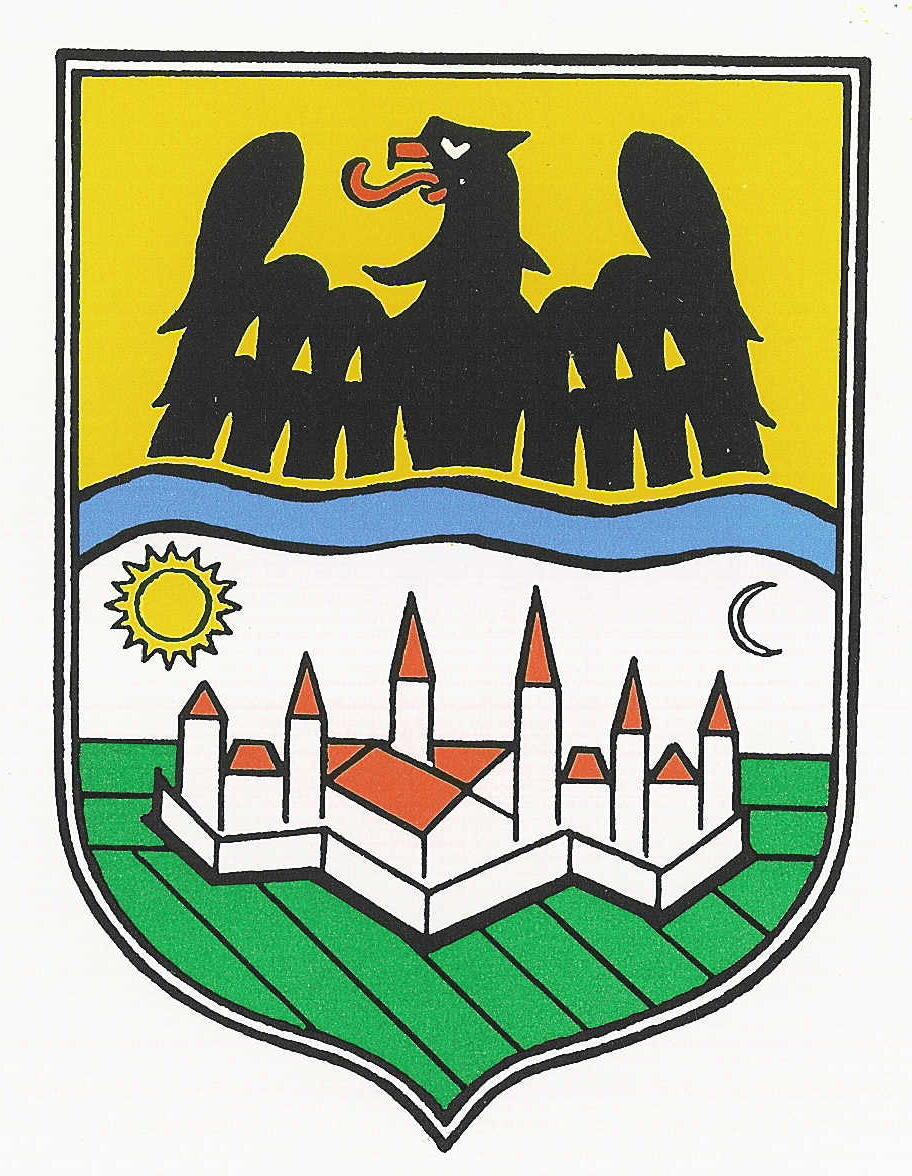
Motto: forever free and undivided.
Innerlichkeit is not a shameful escape and is a German virtue. The inwardness that served as protection from a broken world is the same interior depth that enabled the German people to create rich, inner worlds. Hegel and Kant scaffolded new mountains of thought within their own minds.
Spanish Rebellion & Community
Last month, I visited Barcelona, Spain–or as the locals would forcefully assert, “Catalonia.”
In contrast with Germany, Catalonia stands as a separate case study of how humans react to subjugation. Catalonia’s culture embodies the spirit of outward rebellion. To visitors, Barcelona is seen as the playground of Europe. Walking down narrow bending streets, you will hear the echoes of drunk Germans, Italians, and Brits. Every accent is paired with a Catalan glare.
Catalonians have a learned hatred towards tourists. They believe the culture they built and protected over centuries was the precondition for the cuisine, architecture, and idealism that others now escape to, polluting it in the process.
The Catalonian rebelliousness lies deeper than tourists. Catalonia is a culture and economy without power and is fighting a two-front war against tourists as well as the Spanish state. On a ride to Sarrià, my cab driver expressed frustration that Barcelona contributes more taxes than other regions but receives little in return. To twist the blade in an already raw wound, they never chose to be a part of Spain.
Catalonia was an independent nation, before Spain captured it. Now, they tax the people while simultaneously repressing their culture and power.
While Germans turned inwards, Catalonians latched onto community, tradition, and rebelled outwards. To this day, amidst repeated failures in achieving independence, Catalonians refuse to submit. Speaking Catalan is now an act of rebellion, symbolizing that a power may capture one’s land but never the spirit of the people.
Cuba’s Revolution
My Cuban heritage starts where my Catalonian ancestry ends. The Spanish state also controlled Cuba after Christopher Columbus discovered the territory in 1492. Many Spaniards, including my great-great-grandfather Jaime Baca-Arus, migrated in waves to Cuba over the ensuing 400 years. As a result, the majority of Cubans today are Spanish-descended.
After The United States claimed independence, Cuba soon also separated itself from Spain. Many, including Cuban revolutionary José Martí, were drawn to the American and Emersonian ideal of individualism and self-determination. However, Martí was skeptical that rejecting Spain and inviting the U.S. would be a smooth fix. In Nuestra América, Martí argues for a bespoke solution to governance for Cuba. He warns writing a European-laden constitution on Cuban culture would fail and the country would be swapping one captor for another.
Martí was vindicated in this respect. Soon, Cuba was majority-owned by American enterprises. For a nation that honored its culture, and inherited its rebellious nature from Spain, the people were furious at the corruption and mistreatment they trustfully welcomed. Martí writes that the natural man wants to live well, and will even lay down their arms to great leaders, but will fight with their fists if they are cheated.
“El hombre natural es bueno, y acata y premia la inteligencia superior, mientras ésta no se vale de su sumisión para dañarle, o le ofende prescindiendo de él, que es cosa que no perdona el hombre natural, dispuesto a recobrar por la fuerza el respeto de quien le hiere la susceptibilidad o le perjudica el interés. Por esta conformidad con los elementos naturales desdeñados han subido los tiranos de América al poder; y han caído en cuanto les hicieron traición.”
“The natural man is good, and he respects and rewards superior intelligence, so long as that intelligence does not use his submission to harm him, or offend him by ignoring him—something the natural man does not forgive, being ready to recover by force the respect of whoever wounds his pride or harms his interest. It is through this conformity with the disdained natural elements that the tyrants of América have risen to power; and they have fallen the moment they betrayed them.”
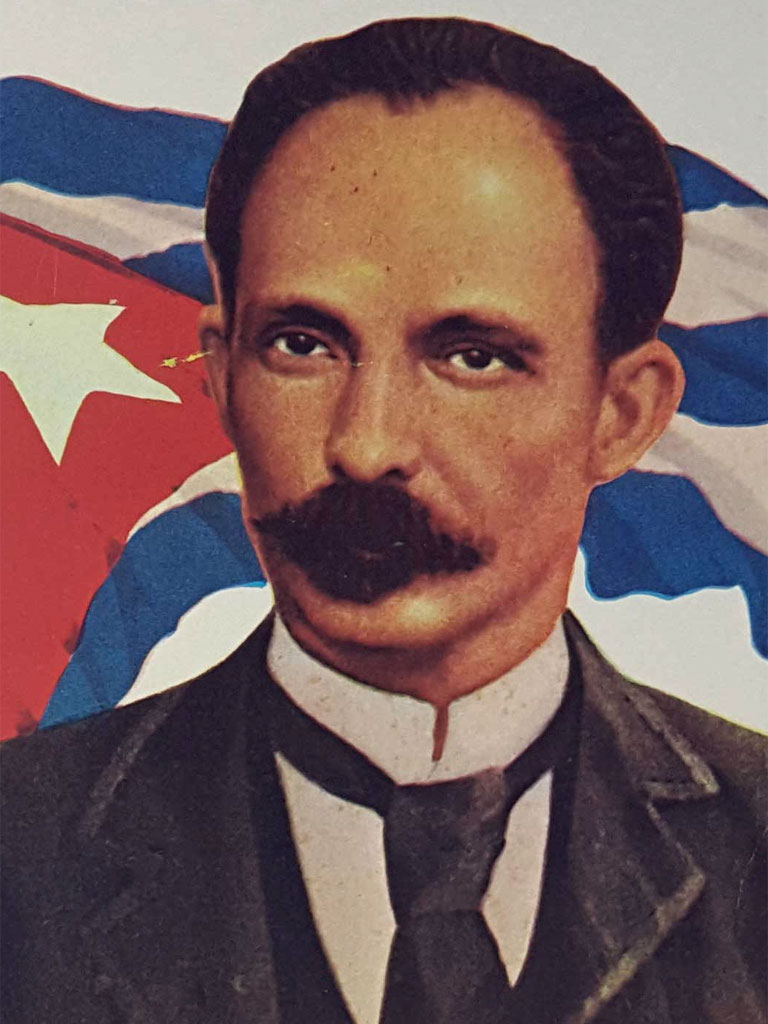
The Cuban people wanted a system that worked for Cubans. Political repression evolved into a different shape. Corruption and the American mafia infiltrated Cuban politics. Cuba became something like Las Vegas, raped by casinos and brothels, and little value accrued to Cubans. While Martí respected Emerson, he priced his ideal as a luxury that Cubans couldn’t afford.
Batista went on to seize absolute power as dictator. Castro answered with rebellion, promising libertad y democracia, only to trade one tyrant for another. Today, the island is a hollow shell of its former self.
America

Tyranny drove the Cuban, German, Spanish, and other diasporas to America. For all its flaws, America remained the only durable bastion constitutionally protecting the freedom of will and F against R for both the weak and the strong.
Many Americans no longer remember what it means to be an American, springing up national debate. Furthermore, the international dynamic has evolved over time. It is difficult to know what to return to and what to pave over anew.
With all this complexity, at the very least, this freedom is one of the major drivers of America’s excellence. The “freedom from” repression R as the first aim of the American promise. But freedom has never been, and never will be, free.
The Burden of Freedom
Dostoevsky famously captures the burden of freedom in The Grand Inquisitor of The Brothers Karamazov. Through Ivan, Dostoevsky argues that man started in the wild and was enslaved. Christ brought freedom to the people only to return 1500 years later and see that it backfired. The people, now blessed with freedom, did not know what to do with themselves. It is easy to be a rebel against clear constraints, it is hard to pick up the pieces and maintain a cohesive whole against the chaos of the universe. Just as soon as man became free, he was pathetically starved in the wilderness.
“For what sort of freedom is it, you reasoned, if obedience is bought with loaves of bread?”
“But in the end they will lay their freedom at our feet and say to us: “Better that you enslave us, but feed us.”
The complexity and burden of all of life and its challenges was too much for each man in isolation. The devil promised coordination in exchange for a dependable meal.
“They are slaves, though they were created rebels.”
“Without a firm idea of what he lives for, man will not consent to live and will sooner destroy himself than remain on earth, even if there is bread all around him… Did you forget that peace and even death are dearer to man than free choice in the knowledge of good and evil?”
Again, humanity’s hand was forced into submission. But not all men. There were those chosen few who commanded this barren landscape and picked up the broken pieces for others. Just as Christ died for man’s sins, The Grand Inquisitor sides with the devil in order to uphold the burden of freedom.
“And there is still more: how many among those chosen ones, the strong ones who might have become chosen ones, have finally grown tired of waiting for you, and have brought and will yet bring the powers of their spirit and the ardor of their hearts to another field, and will end by raising their free banner against you!
Ivan makes an extremely strong argument, and one that is difficult to refute. But his pessimism avoids the fact, once again, that freedom as present in America today is preferable to the failures of tyranny. America is modernity’s optimistic rebuttal, providing an arena of choice. So long as you recognize the cost. We can not have complete freedom or tyranny, neither everything nor nothing is permitted.
Faustian Striving
Goethe goes beyond The Grand Inquisitor and shows that coordination and striving are righteous in Faust. Dr. Faustus is fed up with his human limitations. He wants more, so he cuts a deal with the devil.
Faust is not clean. He harms people. He is arrogant, restless, and often ugly in motion. But Goethe’s view is that the world is already broken. Redemption is not reserved for total purity but for the one who keeps striving to fix it. Boldness in creation is messy.
Wer immer strebend sich bemüht,
Den können wir erlösen
He who strives on and lives to strive,
Can earn redemption still
The Stages of Freedom / Stages of Striving
One does not wake up and decide that he is The Grand Inquisitor. Faust strives over his entire life. America’s offer is that it provides you freedom from R, but you are responsible for your own bread and the “freedom to” create. The American ideal rewards merit, and I believe that this comes with stages of freedom, starting with self-reliance, with each stage being more difficult than the last.
Emerson embodies the authentic individualism that Martí respected. He simply says the world is always trying to bend you, but to maintain your own independence and embrace fate is the first step to virtue.
While individualism in the limit may be ideal for a poet, Martí was correct to call out the limits to individualism for warring groups, whether that is a revolutionary force or an enterprise of individuals competing in the free market.
The first ideal of an American is individualism but this is eventually eclipsed by the “freedom to” create. We can learn something from the Spanish.
When you invite others, you shift gears towards Faustian striving. The destinies of the individuals are tied to each other, and you must be prepared to uphold the burden of freedom and, in a competitive world, domination.